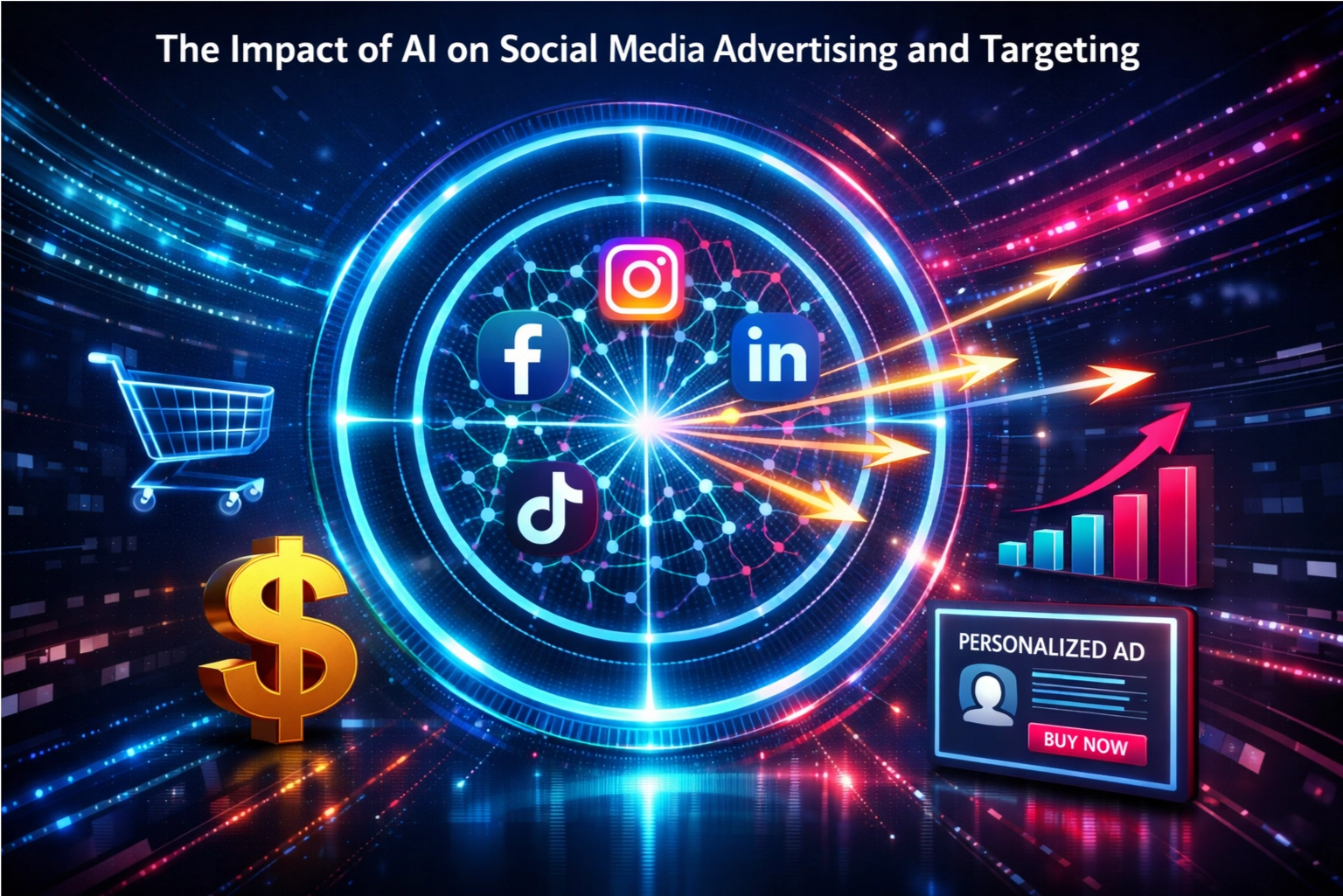
Social media advertising has come a long way from simple banner ads and boosted posts. Today, ads feel smarter, more relevant, and more personalized than ever before—and that’s largely thanks to artificial intelligence (AI). Behind every ad you see on platforms like Facebook, Instagram, TikTok, LinkedIn, and X lies a complex system analyzing behavior, predicting intent, and matching brands with the right audiences.
AI has transformed how advertisers target users, optimize campaigns, and measure success. In this article, we explore the impact of AI on social media advertising and targeting, how it benefits brands and users, and what the future holds for digital advertising.
The Evolution of Social Media Advertising
In the early days of social media, advertising was relatively basic. Brands targeted users based on simple demographics such as age, location, and gender. While this approach worked to some extent, it lacked precision and often resulted in wasted ad spend.
As platforms grew and user behavior became more complex, traditional targeting methods were no longer enough. AI emerged as the solution, enabling advertisers to move from broad targeting to hyper-personalized ad experiences.
How AI Powers Social Media Advertising
At its core, AI helps machines learn from data. Social media platforms collect vast amounts of information from user interactions, and AI processes this data to make real-time decisions about which ads to show and to whom.
Behavioral Targeting
AI analyzes user behavior such as:
-
Likes, comments, and shares
-
Video watch time
-
Search queries
-
App usage patterns
Instead of relying solely on who users are, AI focuses on what they do. This behavioral targeting allows advertisers to reach people who are most likely to be interested in their products or services.
Predictive Targeting and Intent Analysis
One of the most powerful impacts of AI is its ability to predict user intent. AI models identify patterns that suggest purchase readiness, interest shifts, or future needs.
For example, if a user engages with fitness content, follows workout creators, and watches nutrition videos, AI may predict interest in fitness-related products—often before the user actively searches for them.
This predictive targeting leads to higher conversion rates and more efficient ad campaigns.
Personalized Advertising Experiences
AI has changed advertising from interruption-based messaging to personalized storytelling.
Dynamic Ad Personalization
AI allows advertisers to customize ads in real time by adjusting:
-
Headlines
-
Images or videos
-
Product recommendations
-
Call-to-action buttons
Two users may see completely different versions of the same ad, tailored to their interests and behaviors. This dynamic personalization makes ads feel more relevant and less intrusive.
Context-Aware Ad Placement
AI considers context, such as time of day, device type, and user mood. For example, entertainment ads may perform better in the evening, while educational content may resonate more during work hours.
By placing ads at the right moment, AI increases engagement and improves overall user experience.
AI-Driven Campaign Optimization
Advertising no longer requires constant manual adjustments. AI continuously learns and optimizes campaigns in real time.
Automated A/B Testing
AI tests multiple ad variations simultaneously, analyzing performance data to determine which elements work best. Underperforming ads are phased out, while successful ones are scaled automatically.
This reduces guesswork and helps advertisers maximize results faster.
Budget Allocation and Bidding
AI-powered systems optimize ad spend by allocating budgets to high-performing audiences and placements. Automated bidding strategies adjust in real time to achieve goals such as:
-
Maximum conversions
-
Lowest cost per click
-
Highest return on ad spend
For businesses of all sizes, this means more efficient use of advertising budgets.
The Role of AI in Audience Segmentation
AI enables advanced audience segmentation that goes far beyond demographics.
Lookalike and Similar Audiences
AI analyzes existing customer data to find users with similar behaviors and interests. These lookalike audiences help brands scale campaigns while maintaining relevance.
Micro-Segmentation
AI can identify niche segments within broader audiences, allowing brands to deliver highly targeted messaging. This micro-segmentation increases engagement and builds stronger customer relationships.
Benefits of AI-Powered Advertising for Brands
AI-driven social media advertising offers several advantages:
-
Higher engagement rates
-
Improved targeting accuracy
-
Reduced ad fatigue
-
Better campaign performance insights
By delivering the right message to the right person at the right time, AI helps brands build trust and drive long-term growth.
Benefits for Users
While advertising often gets a bad reputation, AI personalization can improve user experience. Relevant ads are less disruptive and more useful, helping users discover products and services aligned with their interests.
When done ethically, AI-driven advertising benefits both advertisers and audiences.
Ethical Considerations and Privacy Concerns
The rise of AI in advertising also raises important ethical questions.
Data Privacy and Transparency
Users are increasingly aware of how their data is used. Platforms and advertisers must prioritize transparency, comply with regulations, and give users control over their data.
Avoiding Manipulation
AI should enhance decision-making, not exploit it. Responsible advertising avoids manipulative tactics and respects user autonomy.
The Future of AI in Social Media Advertising
As AI continues to evolve, social media advertising will become even more intelligent and immersive. Future trends may include:
-
AI-generated ad creatives
-
Voice and visual search targeting
-
Augmented reality shopping ads
-
Real-time emotional targeting
Despite these advancements, trust and authenticity will remain critical.
Final Thoughts
The impact of AI on social media advertising and targeting is undeniable. AI has transformed ads from broad, generic messages into personalized, data-driven experiences that benefit both brands and users.
However, technology alone doesn’t guarantee success. The most effective advertising strategies combine AI-powered insights with human creativity, ethical responsibility, and a deep understanding of audience needs.
As social media continues to evolve, AI will remain a powerful tool—shaping not just what we see, but how brands connect with people in meaningful ways.
