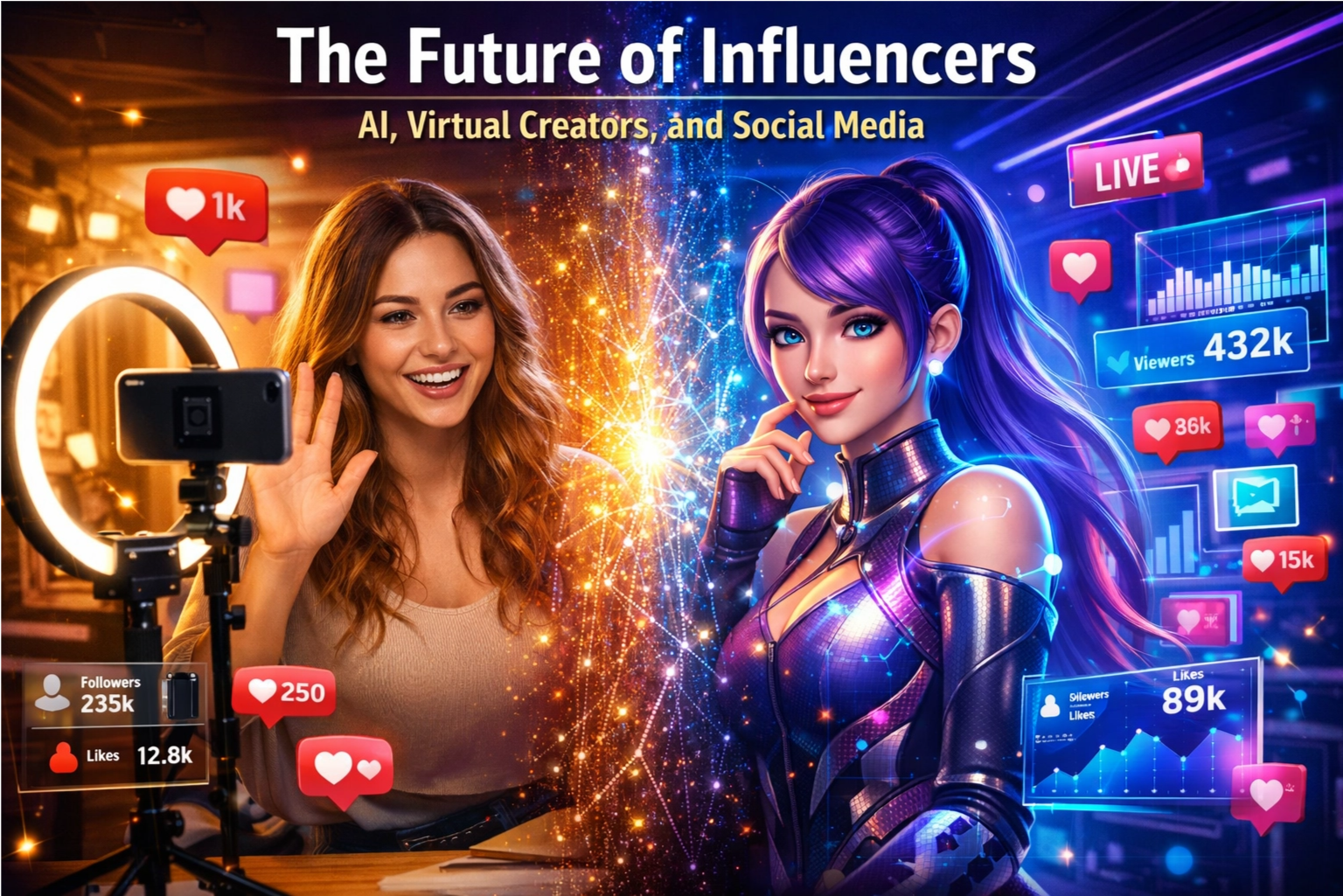
The influencer marketing world is changing faster than ever. What started as everyday people sharing photos and opinions online has evolved into a billion-dollar industry shaping trends, purchasing decisions, and even cultural movements. Now, a new force is redefining the landscape: artificial intelligence.
From AI-powered content creation to fully virtual influencers with millions of followers, the future of influencers is no longer limited to humans alone. Brands, creators, and audiences are entering a new era where technology and creativity blend seamlessly. In this article, we explore the future of influencers, the rise of AI and virtual creators, and how social media is being reshaped in the process.
The Evolution of Influencer Marketing
Influencer marketing began with bloggers and early YouTube creators who built trust by sharing authentic experiences. Over time, platforms like Instagram, TikTok, and Twitch accelerated this growth, allowing influencers to reach global audiences instantly.
Today, influencer marketing is more data-driven than ever. Brands evaluate engagement rates, audience demographics, and conversion metrics before partnering with creators. As competition increases, influencers are turning to AI tools to stay relevant, efficient, and creative.
How AI Is Changing Influencer Creation
Artificial intelligence is no longer just a behind-the-scenes tool. It’s actively shaping how influencers create, distribute, and optimize content.
AI-Powered Content Creation
Many influencers now use AI to help generate:
-
Captions and hashtags
-
Video scripts and hooks
-
Image enhancements and filters
-
Short-form video edits
AI tools can analyze what performs best on specific platforms and suggest improvements in real time. This allows influencers to focus more on storytelling and personality rather than repetitive tasks.
Personalized Content at Scale
One of AI’s biggest advantages is personalization. Influencers can use AI to tailor content for different audience segments without creating everything from scratch.
For example, AI can:
-
Adapt messaging for different regions
-
Translate content into multiple languages
-
Customize recommendations based on follower behavior
This level of personalization helps influencers build stronger connections while reaching a wider audience.
The Rise of Virtual Influencers
Virtual influencers are digital characters created using AI, 3D modeling, and motion capture technology. They look human, behave like influencers, and interact with followers on social media—yet they don’t exist in the physical world.
Some virtual influencers already have millions of followers and brand partnerships with global companies.
Why Brands Are Investing in Virtual Creators
Brands are increasingly drawn to virtual influencers for several reasons:
Full Creative Control
Virtual influencers never go off-brand, miss deadlines, or get involved in scandals. Brands can carefully craft their personalities, values, and messaging.
24/7 Availability
Virtual creators don’t sleep, age, or burn out. They can produce consistent content around the clock.
Global Appeal
Digital influencers can be easily adapted to different cultures, languages, and markets.
Cost Efficiency Over Time
While initial development costs can be high, virtual influencers can be more cost-effective in the long run compared to traditional celebrity endorsements.
Audience Reactions to Virtual Influencers
At first, audiences were skeptical. But as technology improved, many users began engaging with virtual influencers just like human creators. Younger generations, in particular, are more open to digital identities and AI-driven personalities.
Authenticity now comes less from physical presence and more from consistency, storytelling, and relatability—even if the influencer isn’t real.
AI Influencers vs Human Influencers
Rather than replacing human influencers, AI is expanding the ecosystem.
Strengths of Human Influencers
-
Emotional intelligence
-
Real-life experiences
-
Cultural awareness
-
Genuine relatability
Strengths of AI and Virtual Influencers
-
Data-driven optimization
-
Scalability
-
Brand safety
-
Consistency
The future likely belongs to a hybrid model, where human influencers use AI tools, and virtual influencers coexist alongside real creators.
How Social Media Platforms Are Adapting
Social media platforms are actively integrating AI to support this evolution. Algorithms now favor:
-
Short-form video content
-
Interactive storytelling
-
Consistent posting schedules
-
High engagement in the first few minutes
AI helps influencers understand these algorithms better and adjust their strategies accordingly. Platforms themselves are also experimenting with AI-generated avatars, filters, and virtual shopping experiences.
Ethical Concerns and Transparency
As AI and virtual influencers grow, ethical questions become more important.
Disclosure and Trust
Audiences want transparency. Many believe virtual influencers and AI-generated content should be clearly labeled to avoid misleading users.
Data Privacy
AI relies on data to function effectively. Influencers and brands must ensure responsible data usage and respect user privacy.
Unrealistic Standards
Virtual influencers can be designed to look “perfect,” raising concerns about unrealistic beauty standards. Responsible design and diverse representation will be crucial moving forward.
Opportunities for Aspiring Influencers
AI is lowering barriers to entry for new creators. Aspiring influencers can now:
-
Use AI to improve production quality
-
Analyze trends without expensive teams
-
Compete with larger creators using data-driven insights
Virtual influencer creation is also becoming more accessible, opening new career paths in digital design, storytelling, and AI development.
The Future of Influencer Marketing
Looking ahead, influencer marketing will become more immersive, interactive, and intelligent. We can expect:
-
AI-generated influencers tailored to niche communities
-
Virtual influencers hosting live events
-
Deeper integration with e-commerce
-
Real-time content optimization using AI analytics
Despite these advancements, one thing remains unchanged: audiences crave connection. Whether the influencer is human or virtual, success will depend on authenticity, values, and meaningful engagement.
Final Thoughts
The future of influencers is not a battle between humans and machines—it’s a collaboration. AI and virtual creators are transforming how content is created, shared, and monetized on social media. They offer exciting opportunities for brands and creators alike, while also challenging traditional ideas of authenticity and influence.
As technology continues to evolve, the most successful influencers will be those who embrace AI as a tool, not a replacement. By combining creativity, transparency, and innovation, influencers—both human and virtual—will shape the next generation of social media.
