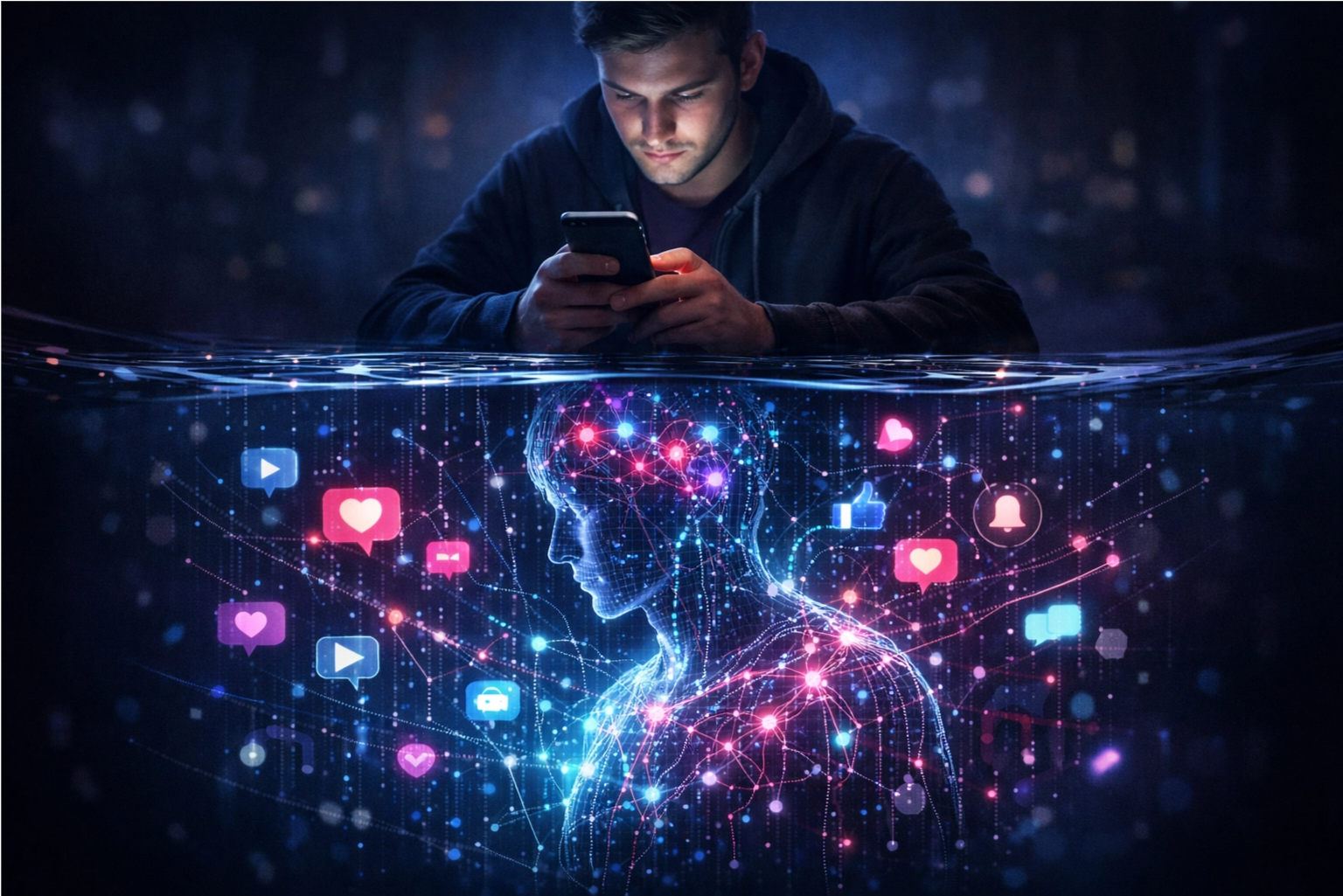
Have you ever opened Instagram or TikTok “just for five minutes” and suddenly realized an hour has disappeared? Or noticed that your feed seems to know what you’re thinking before you even search for it? That’s not coincidence. It’s artificial intelligence quietly working behind the scenes—observing, learning, and predicting your behavior with surprising accuracy.
In many ways, AI understands your social media behavior better than you do yourself. Not because it’s smarter in a human sense, but because it sees patterns you can’t. Let’s explore how that happens, why it’s so effective, and what it means for your digital life.
The Hidden Language of Your Social Media Actions
Most people think social media behavior is simple: likes, comments, shares, and follows. But to AI systems, these are just the surface signals.
Behind every swipe, pause, scroll, and replay is behavioral data. AI tracks:
-
How long you pause on a post
-
Whether you watch a video to the end
-
The speed of your scrolling
-
Which posts you skip instantly
-
What time of day you’re most active
-
How often you return to similar content
You might not consciously remember lingering on a video about productivity or relationship advice, but AI does. And it remembers every time.
This is where AI outperforms human self-awareness—it never forgets, never gets distracted, and never relies on feelings or memory.
Why Humans Are Bad at Understanding Their Own Behavior
We like to think we know ourselves well, but psychology tells a different story. Humans are notoriously bad at accurately explaining their own actions. We rationalize, forget, or oversimplify.
You might say:
-
“I don’t really like fitness content.”
-
“I’m not interested in finance.”
-
“I only use social media for entertainment.”
But your behavior might say otherwise.
If you consistently watch workout videos, save budgeting tips, or pause longer on career advice posts, AI trusts your actions, not your words. And actions are far more reliable data points than self-reported preferences.
How AI Learns Faster Than You Do
AI models used by social media platforms rely on machine learning algorithms that constantly update themselves. Every interaction refines the system’s understanding of you.
Here’s how the process works:
-
Data Collection – Every interaction becomes a data point
-
Pattern Recognition – AI detects recurring themes in your behavior
-
Prediction Modeling – It predicts what you’re likely to engage with next
-
Feedback Loop – Your next action confirms or corrects the prediction
This loop happens thousands of times faster than human reflection ever could.
While you’re still figuring out what kind of content you enjoy, AI already knows—and is adjusting your feed in real time.
The Psychology Behind AI’s Accuracy
AI doesn’t just analyze what you do—it understands why similar users behave the same way. By comparing your behavior to millions of others, AI identifies psychological patterns such as:
-
Curiosity triggers
-
Emotional responses
-
Fear of missing out (FOMO)
-
Validation-seeking behavior
-
Habit formation cycles
For example, if users who engage with motivational content late at night also tend to interact with self-improvement posts the next morning, AI will anticipate that pattern for you as well.
It’s not guessing. It’s calculating probabilities based on massive datasets.
Why Your Feed Feels “Too Accurate”
Ever felt slightly uncomfortable when social media shows you something that feels too relevant? That’s called predictive personalization.
AI systems don’t wait for you to search. They anticipate needs before you consciously recognize them. Feeling bored? Stressed? Unmotivated? AI notices subtle behavioral changes—like slower scrolling or repeated app openings—and adjusts accordingly.
This is why content often feels:
-
Emotionally relevant
-
Perfectly timed
-
Aligned with your current mood
It’s not reading your mind, but it’s reading your behavior extremely well.
AI vs. Human Memory: Why Machines Win
Humans rely on memory, which is selective and emotional. AI relies on data, which is complete and neutral.
You might forget:
-
What you watched three days ago
-
Which topics consistently grab your attention
-
How often you engage with similar content
AI remembers everything. It stores, analyzes, and connects dots across weeks, months, and even years.
This long-term behavioral memory allows AI to understand trends in your interests—whether they’re growing, fading, or shifting over time.
The Business Side: Why Platforms Care So Much
Understanding your social media behavior isn’t just about user experience—it’s about revenue.
The better AI understands you, the more:
-
Time you spend on the platform
-
Ads you interact with
-
Products you’re likely to buy
This is why social media companies invest billions in AI development. Attention is currency, and AI is the most efficient tool for capturing it.
From an SEO and marketing perspective, this level of personalization has reshaped digital advertising, influencer marketing, and content creation entirely.
Is AI Manipulating You—or Just Reflecting You?
This is where opinions split.
Some argue that AI manipulates behavior by reinforcing habits and emotional triggers. Others believe it simply reflects who we already are.
The truth lies somewhere in between.
AI doesn’t create your interests—but it amplifies them. It nudges you toward content you’re already vulnerable to engaging with, making it easier to stay longer, click more, and return often.
Understanding this gives you power. Awareness is the first step toward control.
How You Can Take Back Control of Your Feed
If AI understands your behavior better than you do, the solution isn’t to fight it—it’s to use it consciously.
Here’s how:
-
Engage intentionally with content you want more of
-
Stop lingering on posts you don’t want influencing your feed
-
Use “Not Interested” options when available
-
Take breaks to disrupt behavioral patterns
AI learns from behavior. Change your actions, and the algorithm adapts.
The Future of AI and Social Media Behavior
As AI becomes more advanced, its understanding of human behavior will only deepen. Future systems may analyze tone, micro-interactions, and even emotional states with greater precision.
This raises important questions about privacy, autonomy, and mental health—but it also opens doors to more meaningful digital experiences when used responsibly.
Final Thoughts
AI understands your social media behavior better than you do because it watches quietly, remembers everything, and never lies to itself. It doesn’t judge, forget, or guess—it calculates.
The real question isn’t whether AI knows you well.
It’s whether you know yourself well enough to use that knowledge intentionally.
In a world shaped by algorithms, self-awareness might just be the most powerful tool you have.
