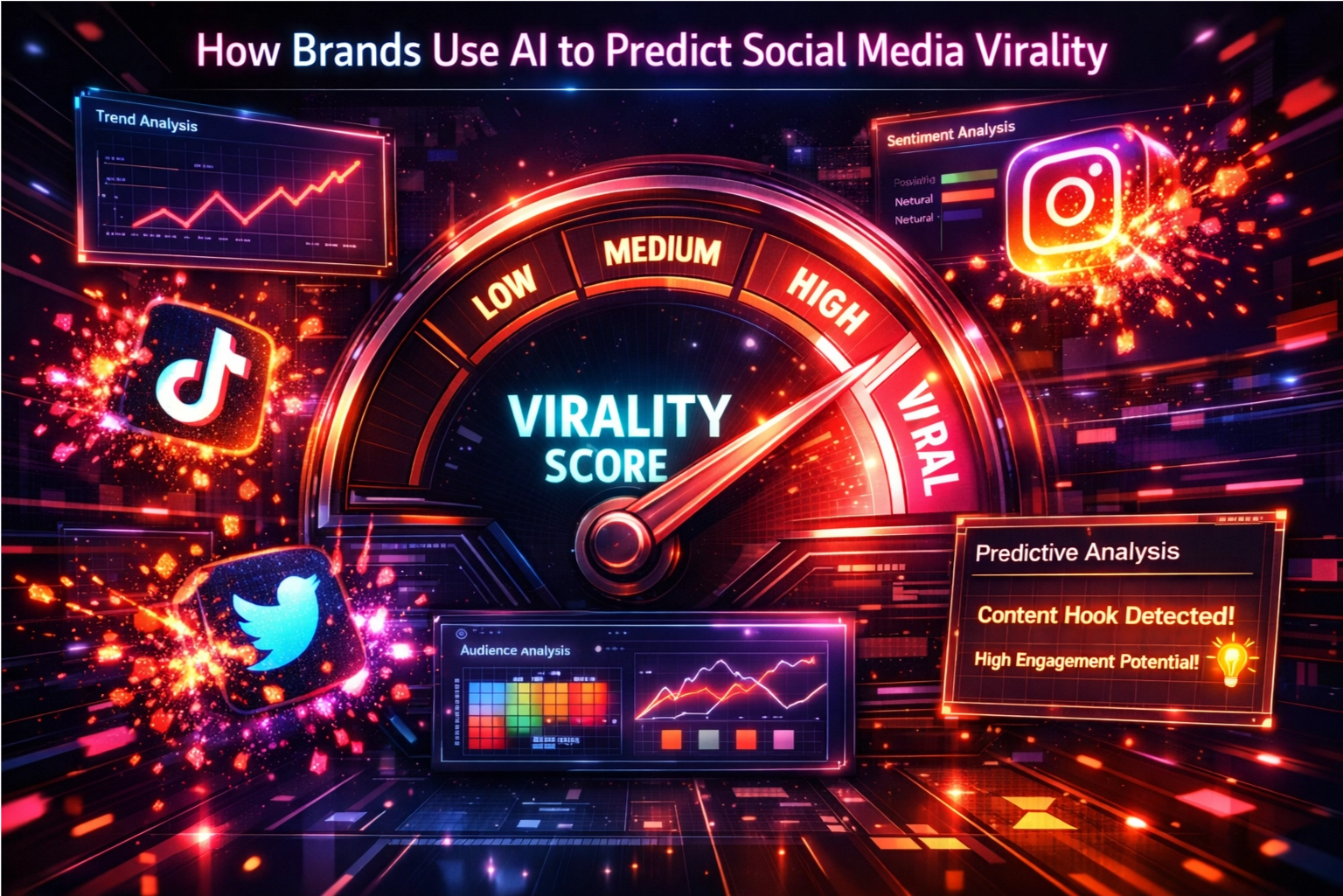
In today’s fast-moving digital world, social media virality can turn a small brand into a household name overnight. A single TikTok, Instagram Reel, or tweet can generate millions of views, spark global conversations, and drive massive sales. But virality isn’t just luck anymore. Behind many viral moments lies a powerful tool: artificial intelligence (AI).
Brands are increasingly using AI to predict which content will go viral before it’s even published. From analyzing audience behavior to identifying emerging trends, AI is transforming how marketers approach social media. This article explores how brands use AI to predict social media virality, why it works, and what it means for the future of digital marketing.
Understanding Social Media Virality
Before diving into AI, it’s important to understand what social media virality really means. Viral content spreads rapidly across platforms through likes, shares, comments, and saves. It often triggers strong emotional reactions—humor, surprise, inspiration, or even outrage.
Traditionally, marketers relied on intuition, experience, and trial-and-error. While creativity still matters, the sheer volume of content posted every day makes it nearly impossible to predict success manually. This is where AI steps in.
The Role of AI in Social Media Marketing
Artificial intelligence refers to systems that can analyze data, recognize patterns, and make predictions with minimal human intervention. In social media marketing, AI tools process massive amounts of data far beyond human capacity.
AI helps brands answer questions like:
-
What type of content resonates most with our audience?
-
When is the best time to post?
-
Which topics are about to trend?
-
What emotional tone drives the most engagement?
By answering these questions, AI gives brands a clearer roadmap to virality.
How AI Predicts Viral Content
1. Analyzing Historical Performance Data
One of the most powerful ways brands use AI is by analyzing past content performance. AI tools examine metrics such as:
-
Likes, shares, comments, and saves
-
Watch time and completion rates
-
Click-through rates
-
Posting time and frequency
By studying thousands—or even millions—of past posts, AI identifies patterns that indicate viral potential. For example, it might learn that short videos under 15 seconds with humor perform best for a specific audience segment.
This data-driven insight allows brands to replicate success rather than guessing.
2. Audience Behavior and Sentiment Analysis
Understanding your audience is key to virality. AI tools analyze user behavior across platforms, including:
-
What users watch the longest
-
What they comment on
-
Which posts they share with friends
-
Emotional responses in comments and reactions
Sentiment analysis uses natural language processing (NLP) to determine whether conversations around a topic are positive, negative, or neutral. Brands can then create content that aligns with the emotional pulse of their audience.
For instance, if AI detects rising excitement around a trend, brands can jump in early—before the trend becomes oversaturated.
3. Trend Detection in Real Time
Trends move fast on social media. What’s popular today may be forgotten tomorrow. AI excels at real-time trend detection by scanning:
-
Hashtags
-
Keywords
-
Audio usage
-
Visual styles
-
Meme formats
Platforms like TikTok and Instagram change rapidly, and AI helps brands stay ahead. By identifying trends in their early stages, brands can create timely content that feels fresh and relevant—two critical ingredients for virality.
4. Predictive Content Scoring
Some AI tools assign a “virality score” to content before it’s published. These systems evaluate factors such as:
-
Headline strength
-
Visual composition
-
Caption length
-
Emotional triggers
-
Platform-specific best practices
This predictive scoring helps marketers refine content before posting. Instead of asking, “Will this work?”, brands can ask, “How can we improve this to maximize reach?”
5. Optimizing Posting Time and Frequency
Even great content can fail if it’s posted at the wrong time. AI analyzes audience activity patterns to determine:
-
When followers are most active
-
Which days generate higher engagement
-
How often content should be posted to avoid fatigue
By posting at optimal times, brands increase the chances of early engagement—an important factor in how social media algorithms decide what content to boost.
Real-World Examples of Brands Using AI for Virality
Netflix
Netflix uses AI to analyze viewing behavior, social conversations, and meme culture. This allows the brand to create highly shareable social content tailored to specific shows and regions. Many of Netflix’s viral tweets and clips are backed by data-driven insights, not random creativity.
Nike
Nike uses AI-powered analytics to track cultural trends, athlete conversations, and consumer sentiment. This helps the brand launch campaigns that feel timely and emotionally resonant—often leading to viral success.
Small Businesses and Creators
AI isn’t just for big brands. Many small businesses and creators use AI tools to:
-
Generate captions
-
Predict trending sounds
-
Analyze competitor performance
-
Improve content hooks
This levels the playing field, allowing smaller players to compete with larger brands.
Why AI Doesn’t Replace Creativity
While AI is powerful, it doesn’t replace human creativity—it enhances it. AI can tell you what is likely to work, but humans decide how to tell the story.
The most successful brands combine:
-
AI-driven insights
-
Authentic storytelling
-
Emotional intelligence
-
Cultural awareness
Audiences can sense when content feels forced or overly calculated. The human touch—humor, empathy, originality—remains essential.
Ethical Considerations and Limitations
AI isn’t perfect. Over-reliance on data can lead to:
-
Repetitive content
-
Trend fatigue
-
Lack of originality
There are also ethical concerns around data privacy and algorithmic bias. Brands must use AI responsibly, ensuring transparency and respecting user data.
Virality should never come at the cost of trust.
The Future of AI and Social Media Virality
As AI technology continues to evolve, its role in social media marketing will grow. Future developments may include:
-
More accurate virality predictions
-
AI-generated video concepts
-
Real-time content optimization
-
Deeper emotional analysis
However, the brands that truly stand out will be those that balance technology with authenticity. AI can open the door, but genuine connection keeps audiences engaged.
Final Thoughts
Social media virality is no longer just a game of chance. By using AI to analyze data, predict trends, and understand audiences, brands can significantly increase their chances of going viral. From predictive content scoring to real-time trend detection, AI has become a powerful ally in modern marketing.
Still, the heart of virality remains human. Stories, emotions, and authenticity are what make people stop scrolling and start sharing. When brands combine AI intelligence with human creativity, they don’t just chase virality—they build lasting impact.
